
Lorem ipsum dolor sit amet, consectetuer adipiscing elit. Aliquam lacus urna, semper nonummy, venenatis in, lacinia sit amet, mauris...
Pediatric Vision Therapy in Orlando
QUICK LINKS
Visual Health & Learning Center
Lorem ipsum dolor sit amet, consectetuer adipiscing elit. Aliquam lacus urna, semper nonummy, venenatis in, lacinia sit amet, mauris...
Lorem ipsum dolor sit amet, consectetuer adipiscing elit. Aliquam lacus urna, semper nonummy, venenatis in, lacinia sit amet, mauris...
Lorem ipsum dolor sit amet, consectetuer adipiscing elit. Aliquam lacus urna, semper nonummy, venenatis in, lacinia sit amet, mauris...
Lorem ipsum dolor sit amet, consectetuer adipiscing elit. Aliquam lacus urna, semper nonummy, venenatis in, lacinia sit amet, mauris...
Lorem ipsum dolor sit amet, consectetuer adipiscing elit. Aliquam lacus urna, semper nonummy, venenatis in, lacinia sit amet, mauris...
Lorem ipsum dolor sit amet, consectetuer adipiscing elit. Aliquam lacus urna, semper nonummy, venenatis in, lacinia sit amet, mauris...
Lorem ipsum dolor sit amet, consectetuer adipiscing elit. Aliquam lacus urna, semper nonummy, venenatis in, lacinia sit amet, mauris...

You know your child better than anyone. Maybe they've always avoided reading. Maybe homework takes much longer than it should, or they lose their place every few sentences. These challenges don't always mean your child has a learning disability. Sometimes they're caused by how the eyes and brain work together.
At Visual Health & Learning Center, our eye doctors evaluate the visual skills children rely on every day. If a functional vision problem is making reading, learning, or other daily activities more difficult, vision therapy may help.
Our pediatric vision development center serves children from East Orlando, Waterford Lakes, and the surrounding communities who are looking for children's vision therapy near them.
Your Child Can Have 20/20 Vision and Still Struggle to Read
Many parents are surprised to learn that a child can pass a school vision screening or routine eye exam and still have a vision problem. Seeing 20/20 only tells us how clearly your child sees at a distance. Reading requires many other visual skills, including the ability to keep both eyes working together, follow words across a page, change focus quickly, and process visual information accurately.
You may notice that your child:
- Loses their place while reading
- Skips words or lines
- Uses a finger to keep their place
- Avoids homework or reading altogether
- Complains of headaches or tired eyes
- Covers or closes one eye
- Reads slowly or rereads the same line
- Has difficulty catching or hitting a ball
- Becomes frustrated with close work
Vision Therapy Strengthens the Visual Skills Your Child Uses Every Day
Vision therapy is much like physical therapy, but instead of strengthening the body's muscles, it strengthens the visual skills your child uses every day. The goal isn't simply to help your child see more clearly. It's to help their eyes work together more efficiently, focus comfortably, track accurately, and process visual information more easily.
Vision therapy is often recommended for children with eye tracking problems, focusing difficulties, poor eye teaming, convergence insufficiency, amblyopia (lazy eye), strabismus (eye turn), double vision, and visual processing difficulties. Families throughout East Orlando and Waterford Lakes trust our team for specialized pediatric vision therapy programs.
Vision Therapy Keeps Children Engaged
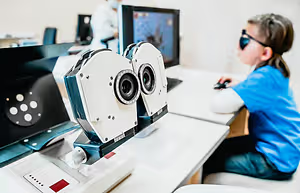
Vision therapy sessions use fun activities. These activities challenge the visual system and keep kids motivated. Depending on your child’s plan, therapy may include special computer programs and vision exercises.
Progress Happens One Step at a Time
Vision therapy is a supervised program. It usually includes one office visit each week. Your child also does short activities at home between visits. Home activities strengthen the skills practiced in the office. They help your child make steady progress.
Vision Therapy Doesn't Replace Other Learning Support
Vision therapy is sometimes misunderstood. It is not tutoring. It does not directly treat ADHD, dyslexia, or learning disabilities. Instead, vision therapy treats functional vision problems. These problems can interfere with learning. Our goal is to help your child use their vision system well. This can make school, sports, and daily life feel easier and more comfortable. It can also build their confidence.